Checking Safety Nets Before Work Begins
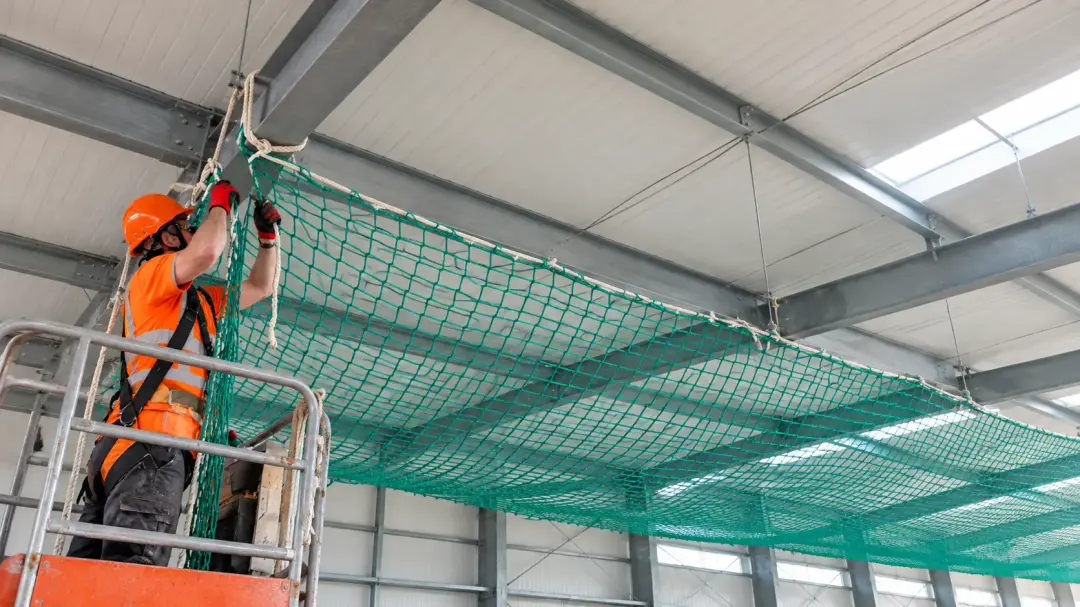
Safety nets should be checked before work begins so obvious problems can be identified before workers rely on them. The inspection should confirm that the netting remains correctly positioned beneath the intended work area. Mesh should be checked for cuts, tears, fraying and other visible damage. Border ropes, connections and attachment points should also remain secure.
The area underneath needs enough clear space for the net to deflect if somebody falls. Materials or equipment placed there since the previous inspection may need moving. Site conditions should also be reviewed. Changes to scaffolding, steelwork or working levels can affect whether the original net position remains suitable.
Any visible damage should be reported rather than ignored or repaired informally by untrained workers. A suitable pre-work check helps confirm that the protection available at the start of the shift still matches the construction activities planned for that area.
Carrying Out Regular Visual Inspections
Regular visual inspections help identify changes to safety netting that develop during everyday construction activity. A net that appeared secure when first installed can later be affected by tools, building materials, structural work or alterations made around the system. Inspections should cover the complete accessible net area rather than focusing only on obvious attachment points. Look for cuts, broken mesh, fraying and unusual distortion. Connections between separate nets should remain secure and should not develop gaps.
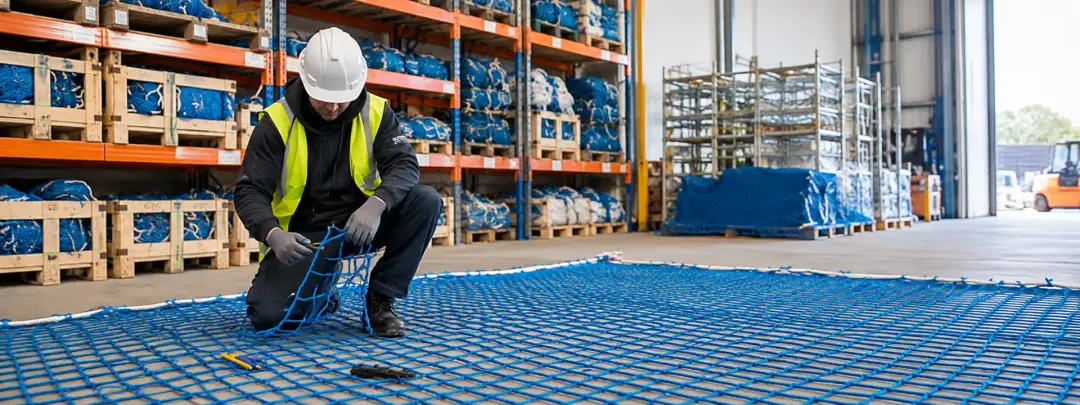
The perimeter should also be checked to confirm that the system remains properly attached around the protected area. Visual inspections should include the conditions above and below the net.
Materials resting on the mesh can add unwanted loads or cause damage. Equipment positioned underneath may reduce safe deflection clearance. Changes to the structure can also influence the installation. New beams or platforms may create obstructions that were not present originally. The active work area should still sit within the net coverage.
If construction has moved into another bay or level, repositioning may be necessary. Workers should report anything unusual rather than assuming somebody else has already checked it. Regular visual inspection complements more detailed inspections and helps site teams identify developing faults between scheduled maintenance visits.
Looking for Cuts, Tears and Fraying
Cuts, tears and fraying can weaken safety netting and should be identified during routine inspections. Damage can occur when sharp materials, tools or structural edges come into contact with the mesh. Even relatively small defects should not automatically be ignored. Their significance depends on their position, size and the safety net system being used.
Inspectors should look across the complete net rather than checking only easily accessible areas. Border sections and places close to steelwork can be particularly vulnerable to abrasion. Workers should not attempt improvised repairs using cable ties, ordinary rope or other unsuitable materials.
Damaged netting needs assessment by somebody competent to determine whether approved repair is possible. Where necessary, the affected net should be removed from use. Early identification helps prevent minor damage becoming larger as the mesh is loaded or exposed to further site activity. Routine inspection therefore plays an important role in maintaining reliable fall protection.
Checking for Damaged Mesh
The mesh forms the main catching surface of a safety net, so its condition needs careful attention throughout construction work. Damage can reduce the ability of the net to perform as intended if someone falls into it. Inspectors should look for broken strands, enlarged openings, cuts and areas that appear unusually worn. Abrasion can develop where netting repeatedly rubs against structural steel, rough surfaces or temporary equipment. Heat and chemical exposure can also affect some synthetic materials, so unusual staining, melting or deterioration should be investigated. The net should not contain unauthorised repairs.
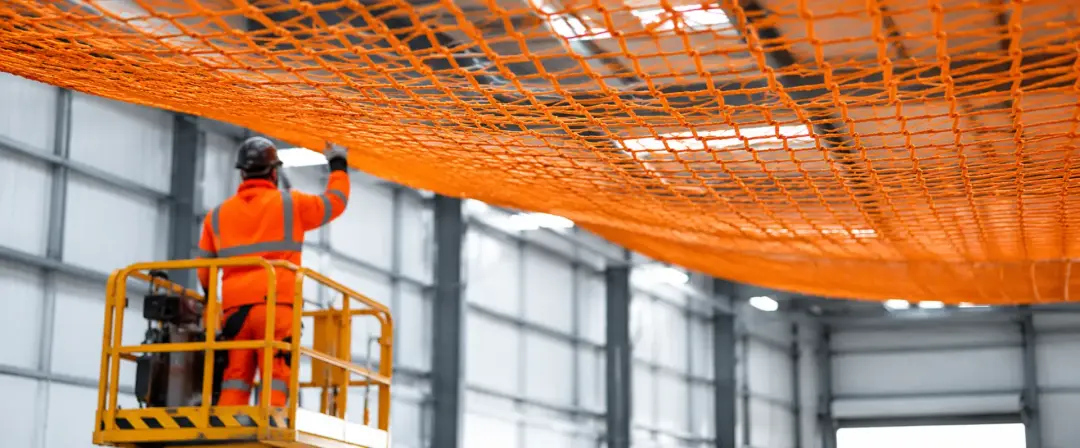
Simply tying damaged sections together may change the way forces are transferred through the mesh. If debris becomes caught in the net, it should be removed appropriately so the mesh can be inspected properly. Heavy materials should not remain resting on the safety net.
Damage near connections or perimeter ropes deserves particular attention because these areas contribute to the overall installation. Any uncertainty about mesh condition should be referred to a competent person.
The net may need approved repair, replacement or removal from service until its condition has been established. Regular checks help ensure deterioration is identified before workers continue carrying out tasks above the affected section.
Inspecting Border Ropes and Connections
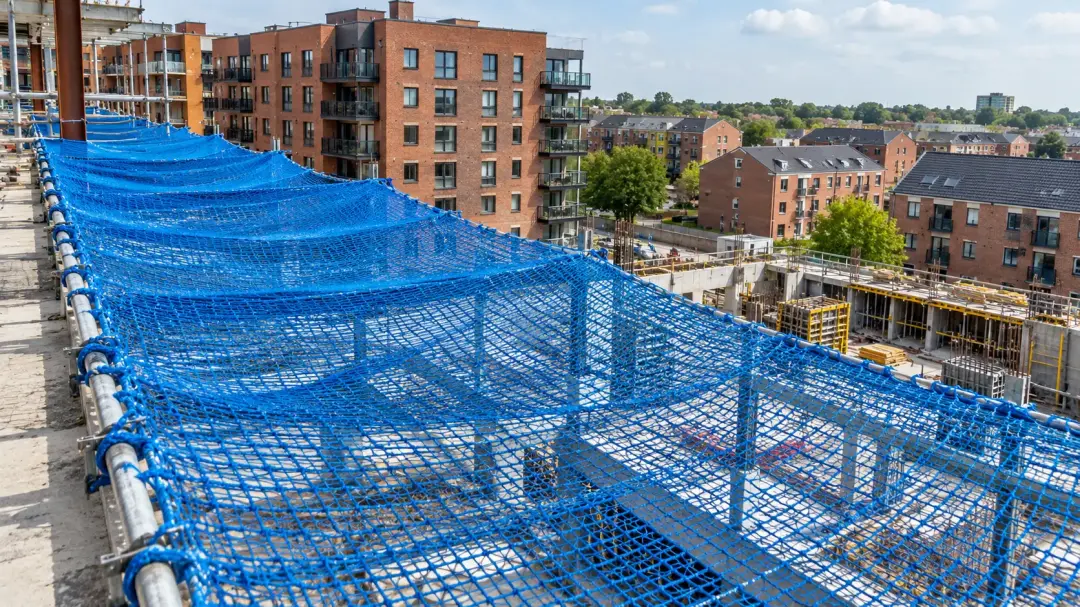
Border ropes and connections help secure the safety net around the protected area and therefore need regular inspection. The border rope should remain in suitable condition without serious abrasion, cuts or visible deterioration. Connections between the net and supporting structure should remain secure.
Where several nets are joined together, the joining arrangement also needs checking. Loose connections can create gaps or change the position of the net. Inspectors should look for signs that other trades have untied, moved or altered the installation. Construction workers should not disconnect the net temporarily to gain easier access. Any change can affect coverage elsewhere. Ropes should also be checked where they contact steel or other surfaces that could create abrasion.
If a connection appears damaged or unsuitable, work above the affected area should not simply continue without assessment. Maintaining border ropes and connections helps the net remain correctly positioned and ensures the complete system works together rather than relying on the mesh alone.
Checking Safety Net Attachment Points
Safety net attachment points transfer forces from the net into the supporting structure, making their condition an important part of routine maintenance. A net can remain visually intact while still becoming unsafe if one or more supporting connections are compromised. Inspectors should confirm that attachment points remain secure and have not been altered by surrounding construction activity. Steel erection, scaffolding changes and temporary works can all affect previously suitable fixing locations. Connections should remain installed using the intended components and methods. Improvised replacements should not be introduced without proper assessment.
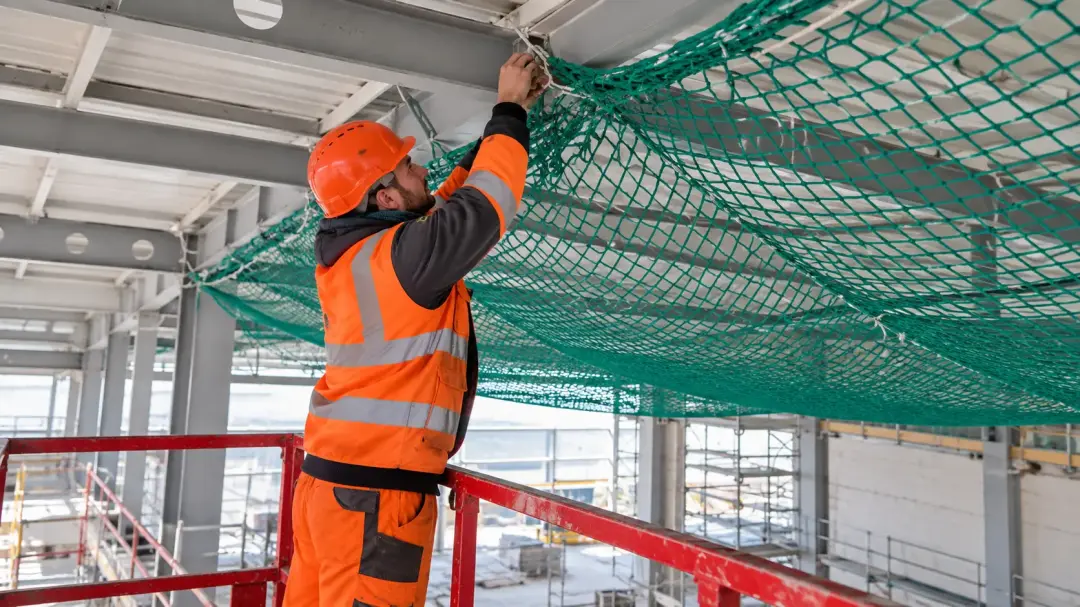
The supporting structure itself should also be checked where practical. Damage, movement or alterations around a fixing point can affect its suitability. Spacing around the net perimeter should remain consistent with the installation arrangement.
If one fixing is removed, additional loads can be transferred to neighbouring connections. Other trades therefore need to understand that attachment points form part of the fall-protection system. They should not remove them simply because they interfere with another task.
Any necessary alteration should be coordinated with the people responsible for the safety net installation. Regular attachment checks are particularly important on fast-moving projects where the building structure changes frequently. Maintaining secure fixing points helps keep the net properly supported and positioned beneath the active work area.
Making Sure Nets Remain Secure
Safety nets need to remain securely attached throughout the period when workers rely on them. Routine checks should confirm that perimeter connections and joining arrangements have not loosened. Construction vibration, weather and alterations by other trades can affect the installation.
Nets should also remain in their intended position. A section that has shifted may create gaps around columns, beams or perimeter edges. Workers should not pull or move the netting to make space for equipment. Any necessary repositioning should be carried out by competent people.
The supporting attachment points should remain suitable and undamaged. If the structure changes, the installation may need reassessment. Keeping nets secure also involves controlling activities around them. Sharp materials should not be dragged across the mesh, and heavy objects should not be left resting in it. Regular checks help confirm that the complete system remains stable rather than assuming the original installation will stay unchanged throughout the project.
Checking for Sagging or Poor Tension
Changes in the way a safety net hangs can indicate that the installation has been altered, overloaded or affected by damaged connections. Inspectors should therefore look for unusual sagging or sections that appear different from the original arrangement. Safety nets are flexible systems and are not intended to be rigid or stretched like solid platforms.
However, significant changes in their position can affect fall distance, coverage and clearance beneath the mesh. Excessive sagging may bring the net closer to lower beams, machinery or stored materials. This can reduce the available space for safe deflection during a fall.
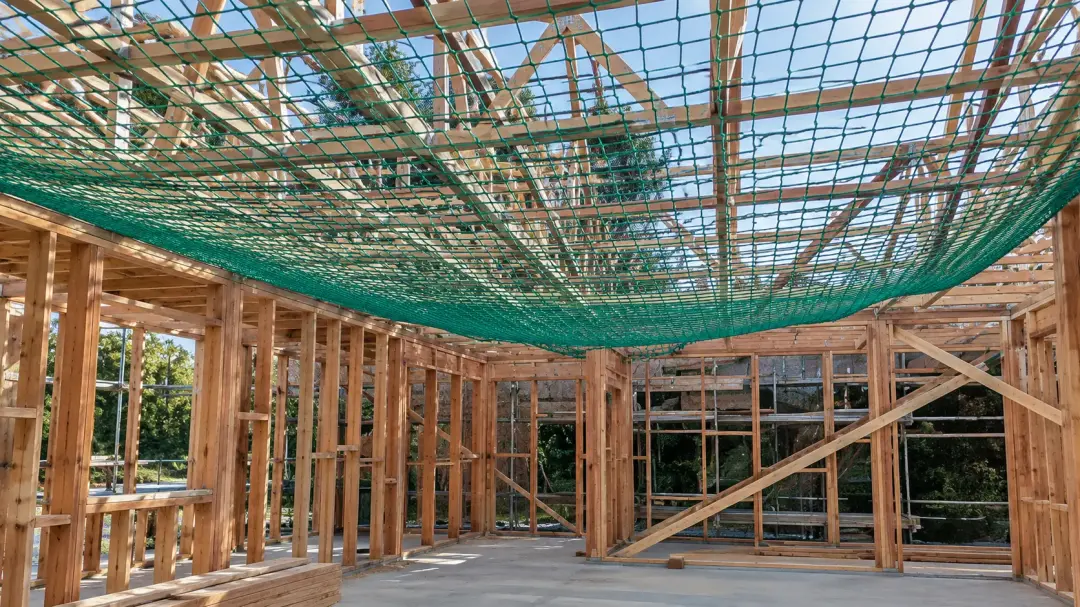
A change in net position might also indicate that an attachment point has moved or been released. Debris or building materials caught in the mesh can create additional sagging and should be removed appropriately. Workers should not attempt to tighten the system themselves unless they are trained and authorised to make adjustments.
The correct installation arrangement depends on the net system and supporting structure. Any uncertainty should be referred to a competent installer.
Regular comparisons with the intended net position can help identify gradual changes that might otherwise go unnoticed. Maintaining the correct arrangement supports suitable clearance and ensures the safety net continues protecting the intended working area.
Keeping the Area Beneath Safety Nets Clear
The area beneath safety nets needs to remain clear enough for the net to deflect if somebody falls into it. Materials, machinery, access platforms and temporary structures can reduce this clearance. A person caught by the net could then strike an obstruction underneath. Site teams should avoid using the deflection area as convenient storage space.
Construction projects change quickly, so an area that was clear during installation may become occupied later. Routine inspections should therefore include the space underneath. Lower beams and permanent structural elements should already have been considered during initial planning. New temporary equipment also needs assessment.
Access beneath the net may additionally be required for rescue arrangements. Keeping the area organised helps preserve both clearance and access. Other contractors should understand why the space cannot simply be filled with materials. Maintaining clear space underneath is an essential part of safety net maintenance and should continue for as long as the system remains in use.
Removing Debris from Safety Nets
Debris can collect in safety nets during construction work, particularly beneath roofing, steel erection and structural activities. Small offcuts, packaging, fixings and other materials may fall into the mesh. Debris should not be allowed to accumulate. Additional weight can cause unnecessary sagging and may change the position of the net. Sharp objects can also cut or abrade the mesh while they remain trapped. Removing material makes routine inspection easier because the surface can be viewed properly. The removal process itself needs to be carried out safely.
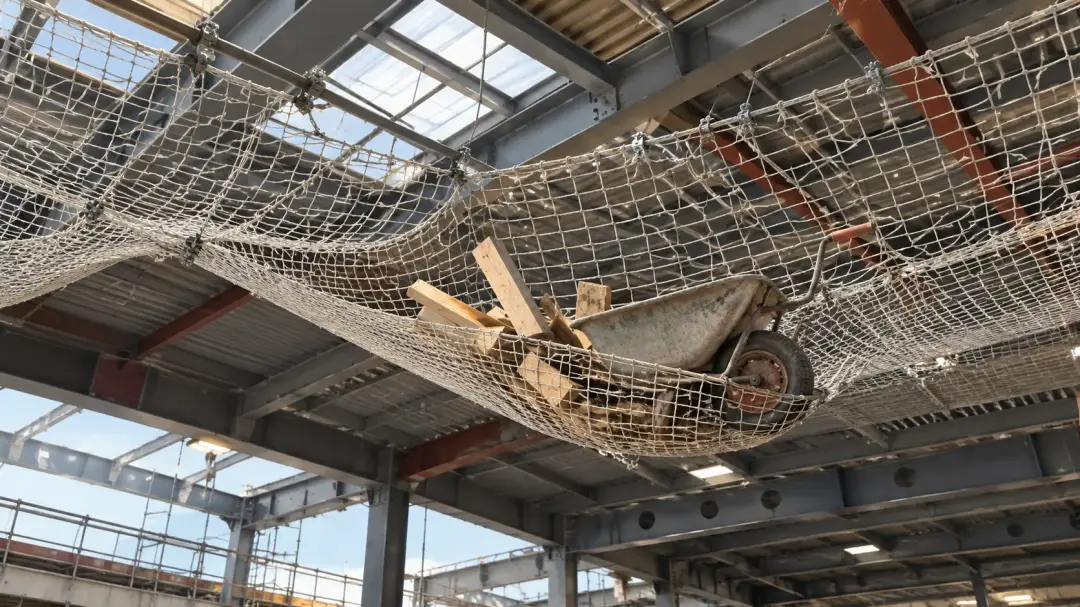
Workers should not climb into or walk across the net as though it were a working platform. A suitable access method should be planned according to the location and type of debris. Large or heavy items may require particular care.
The net should be inspected after debris is removed, especially if the object was sharp or struck the mesh with noticeable force. Any cuts or damaged strands should be reported. Site housekeeping can reduce the amount of material reaching the nets in the first place.
Tools and loose components should be managed carefully when work is taking place overhead. Regular debris removal helps keep the safety net free from unnecessary loads and allows damage to be identified more easily during subsequent inspections.
Checking Nets After a Fall
A safety net that has arrested a person's fall should be taken seriously and inspected before workers continue relying on it. The impact may affect the mesh, border ropes, connections and attachment points. Damage is not always immediately obvious. The supporting structure should also be considered because the fall can transfer significant forces through the fixing system.
Work above the affected net may need to stop until the inspection is completed. The fallen worker also needs to be recovered using the site's planned rescue arrangements. After rescue, competent personnel should assess the net. Depending on the system and condition, repair or replacement may be necessary.
The net should not simply be pulled back into position and returned to service without assessment. Any relevant incident records should also be completed. Checking the complete system after a fall helps ensure hidden damage does not compromise protection for other workers continuing the construction work.
Inspecting Nets After Impact Damage
Safety nets can be affected by impact damage even when no person has fallen into them. Tools, building materials and structural components can strike the mesh during normal construction activities. Any significant impact should trigger an inspection of the affected section. The mesh should be checked for broken strands, enlarged openings and local stretching. Border ropes and nearby attachment points should also be examined. A heavy object may place forces on several parts of the installation rather than damaging only the point of contact. The item should be removed safely before the inspection is completed.
Sharp steel or broken materials can continue cutting into the mesh if left in place. Workers should not assume the net remains suitable because the object was lighter than a person. Damage depends on shape, impact speed and where contact occurred.
If the net has been pulled out of position, coverage and clearance need reassessment. Connections between neighbouring net sections may also have moved. A competent person should decide whether the system can remain in use.
Approved repair may be possible for some forms of damage, while more serious defects can require replacement. Recording significant impact incidents can help maintenance teams monitor repeated problems in particular parts of the site and identify whether working practices need changing.
Checking Safety Nets After Strong Winds
Strong winds can affect safety nets directly and can also move materials or temporary structures around them. After severe weather, the installation should be checked before workers continue relying on it. Look for displaced sections, loose connections and new debris caught within the mesh. Attachment points should also remain secure. Temporary coverings or lightweight building materials may have been blown into the net. These items should be removed safely.
Scaffolding and other temporary works around the installation may also have changed position. This can affect clearance or attachment arrangements. Wind can expose previously unnoticed weaknesses in loose connections. The active work area should still remain fully covered once conditions improve.
If a section has moved, workers should not simply pull it back themselves. Repositioning should be handled by competent personnel. Weather-related checks are particularly important on exposed steel frames, roofs and warehouse projects where strong winds can act across large open areas.
How Rain and Bad Weather Can Affect Safety Nets
Rain and bad weather can affect safety net maintenance by changing both the condition of the work area and the activities taking place around the installation. Wet roofs and steelwork can increase fall risks, making reliable protection particularly important. Rainwater itself should not result in heavy materials being placed in or on the net to hold it down.
The system needs to remain installed according to its intended arrangement. Storms can move debris, temporary coverings and loose construction materials into the mesh. These should be removed safely before they create damage or excessive loading. Bad weather can also affect surrounding scaffolding and temporary structures.
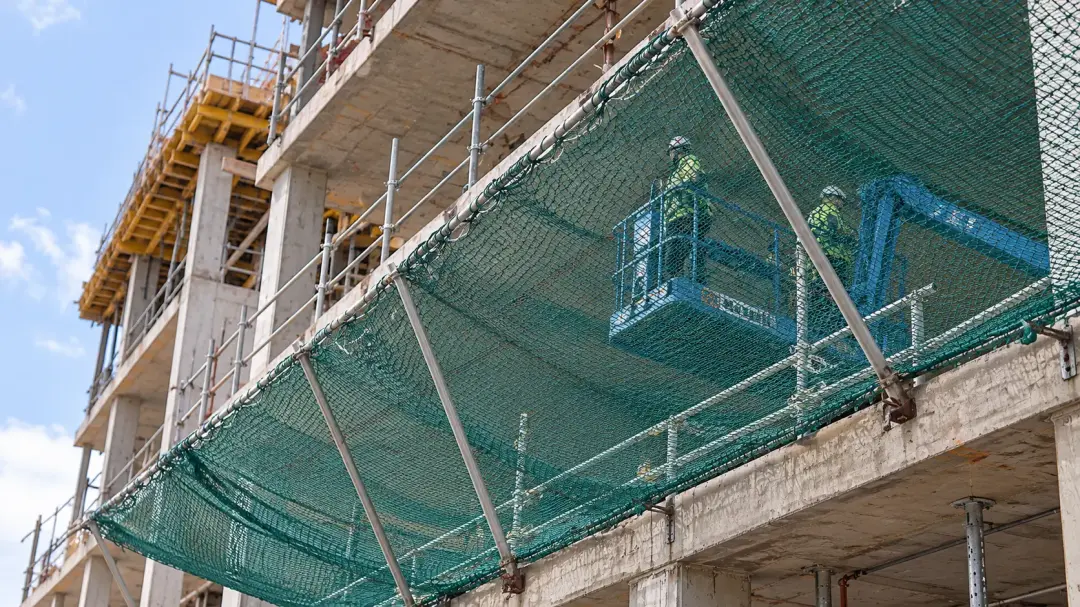
Any changes near attachment points should therefore trigger additional checks. Cold conditions may introduce ice around access areas and structural components. Workers carrying out inspections still need safe access.
Long periods of outdoor exposure can also contribute to gradual material ageing. Inspection arrangements should take account of the net manufacturer's requirements and condition. Weather can delay maintenance if reaching the system would expose workers to additional hazards.
In those circumstances, work above the affected area may need to remain paused until inspection can be completed safely. Considering weather as part of the maintenance plan helps ensure safety nets continue providing suitable protection throughout changing site conditions.
Preventing Damage from Building Materials
Building materials can damage safety nets if they are dropped, dragged across the mesh or stored against the installation. Sharp metal edges, sheet materials and fixings are particular concerns. Materials should be handled carefully when work takes place directly above netting. Site teams should use suitable lifting and storage arrangements rather than relying on the net to catch loose components.
Safety nets are fall-protection equipment, not material storage platforms. Where materials need to pass close to the installation, workers should avoid contact with border ropes and connections. Large components should also be controlled during crane operations. Repeated rubbing against the net can create abrasion even without a significant impact.
If a material does strike or rest on the net, the affected area should be inspected after removal. Good housekeeping can reduce these risks. Keeping loose materials secure around roof and steelwork areas helps protect the netting while also reducing falling-object hazards across the construction site.
Protecting Nets During Other Site Work
Safety nets can be damaged by trades that are not directly involved in their installation or maintenance. Welders, steel erectors, scaffolders and other contractors may work close to the mesh as construction progresses. Site coordination should therefore include protection of the installed netting. Other workers should understand that ropes and attachments must not be cut, moved or temporarily released. Hot work deserves particular attention. Sparks, heat and welding operations can damage synthetic netting if suitable precautions are not taken. Sharp tools and structural components should also be kept away from the mesh wherever possible.
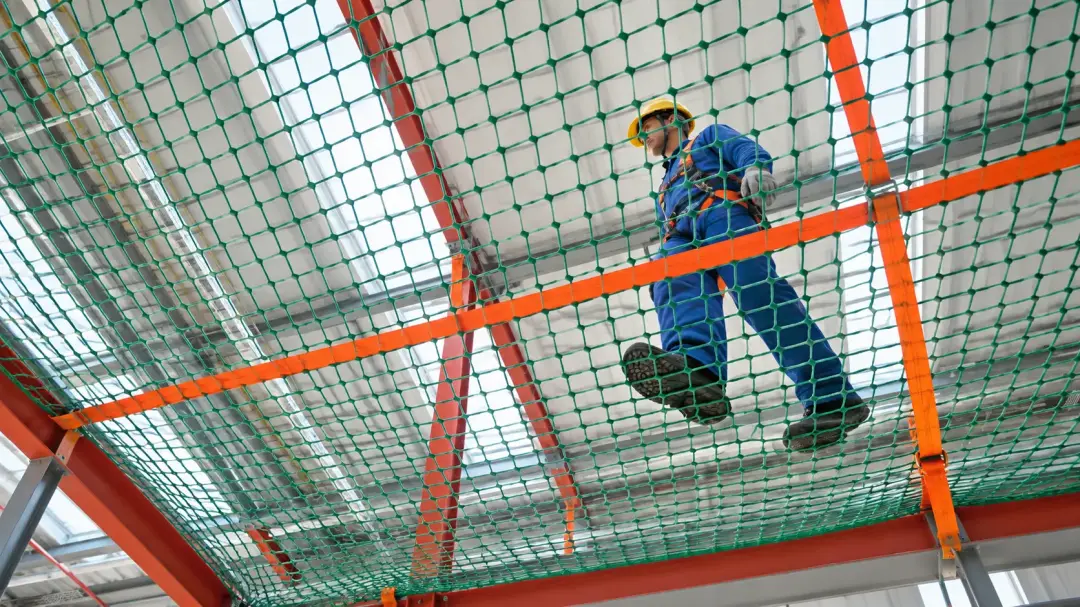
When another trade needs access through an area occupied by netting, changes should be planned with the responsible installer. Informal alterations can create gaps or weaken connections. Temporary platforms and equipment positioned beneath the system should not reduce required deflection clearance.
Cranes and lifting operations should avoid dragging loads across the nets. Clear communication between supervisors helps prevent conflicts. Where work close to the net creates unavoidable exposure to heat, sharp materials or heavy components, additional protection or temporary repositioning may be necessary.
Routine checks after nearby construction activities can identify damage promptly. Treating the safety nets as important site equipment helps ensure other work does not accidentally compromise the fall protection being provided.
Keeping Sharp Objects Away from Safety Netting
Sharp objects should be kept away from safety netting because they can cut or weaken the synthetic mesh and supporting ropes. Common site hazards can include metal edges, fixings, tools and cut sections of structural material. These items should not be stored on top of the net.
Workers operating above should also secure loose tools and materials appropriately. When large components are moved near the net, they should be controlled to prevent contact. Repeated rubbing against a sharp edge can cause damage gradually even without one obvious impact.
Areas where netting passes close to structural steel may therefore need particular inspection. If a sharp object becomes caught in the mesh, it should be removed using a safe access method. The surrounding net should then be checked for cuts or fraying. Preventing contact is preferable to repeatedly repairing damaged sections. Good material handling and housekeeping help protect the net and support its reliability throughout the construction project.
Checking Nets Around Steelwork
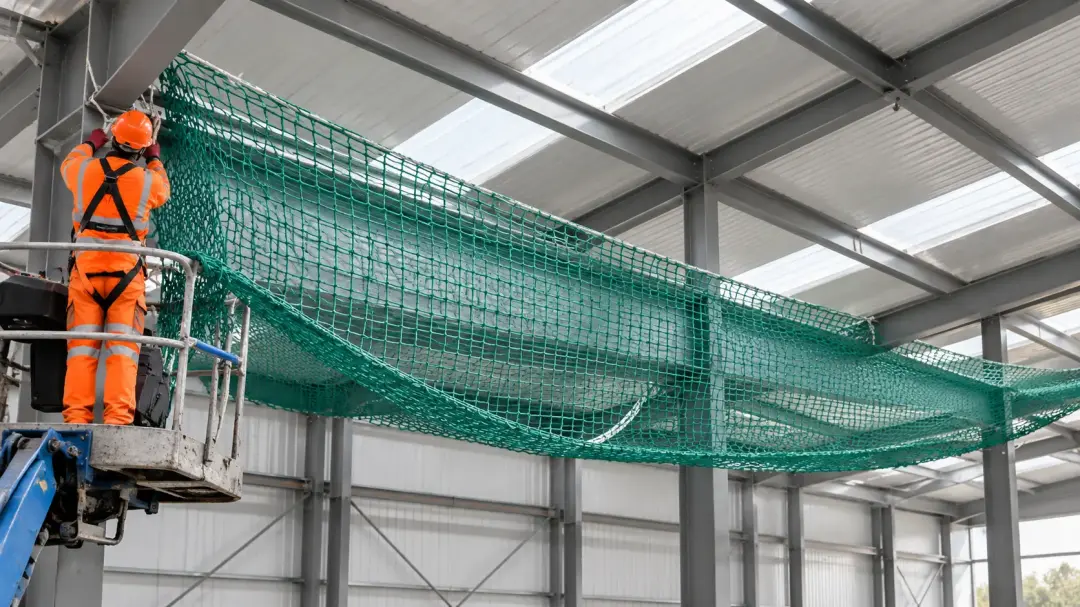
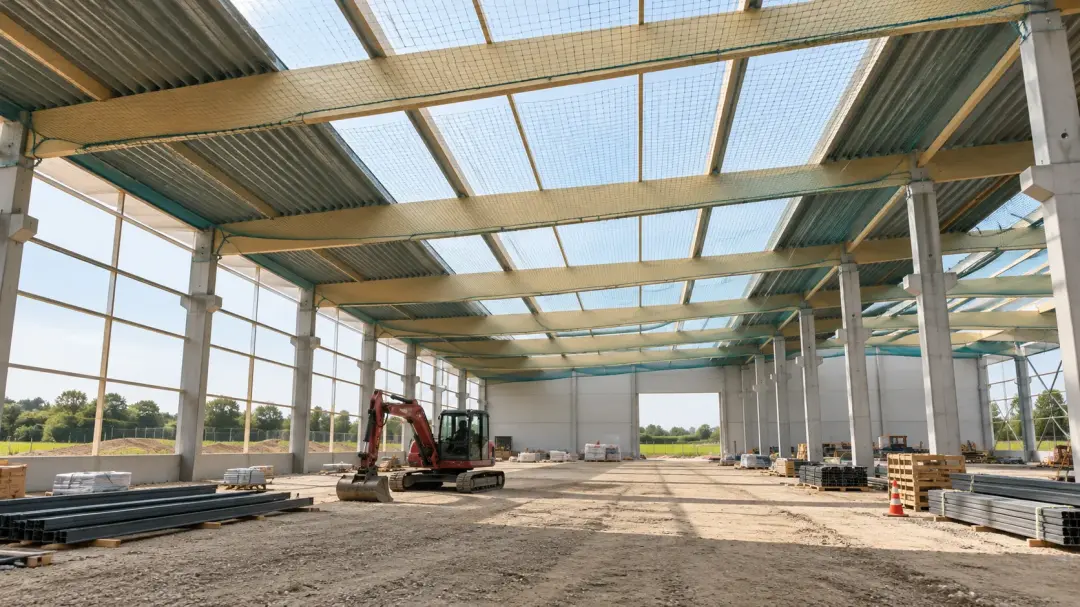
Safety nets installed around structural steel require regular inspection because beams, columns and connections can create points where the mesh is exposed to abrasion or movement. Steel construction can also change rapidly as additional members are installed. Inspectors should check areas where the net passes close to beam edges. Repeated contact can wear mesh or ropes over time. Attachment points around the steel frame should remain secure. New structural members should not interfere with deflection clearance. Columns can create openings around net edges, so these areas should be checked for developing gaps.
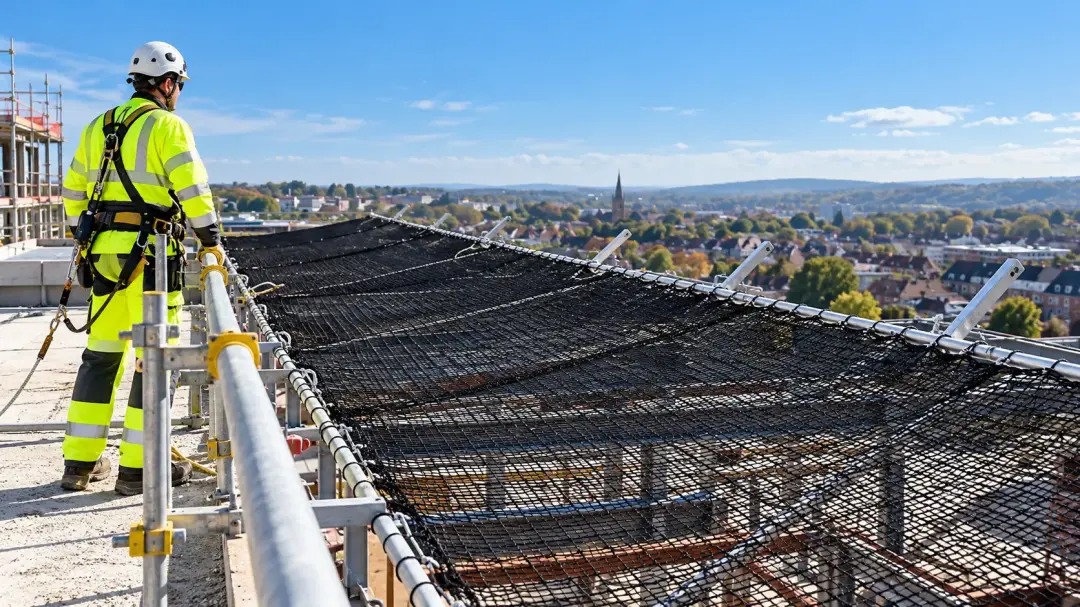
Connections between separate net sections also need attention where steelwork divides the protected area. Steel erection teams should avoid placing hot or sharp materials against the netting. Welding and cutting operations may require additional precautions to protect synthetic materials from heat and sparks.
Cranes and lifting equipment can create further risks if loads contact the installed system. As the steel frame progresses, the active working area may move. Netting should be repositioned rather than left far below or outside the work zone.
Regular communication between net installers and steelwork contractors makes these changes easier to manage. Checking around structural steel helps ensure the net remains securely attached, free from abrasion and properly positioned beneath the workers who depend on it.
SN Scaffolding Ltd supplies, installs and maintains EN 1263-1 compliant safety nets for construction, roofing and specialist projects. Our scaffolding company offers fall-arrest installation, edge protection, debris netting, flexible hire, testing, inspections and fast collection. With industry experience and professionalism, we serve clients across Norfolk and Suffolk. Contact our team today.