Why Safety Nets Are Important on Construction Sites
Safety nets are important because construction work frequently involves people working above ground level where a fall could cause serious injury.
A properly installed net can provide collective protection beneath the working area rather than relying entirely on each worker to connect themselves to a personal system. This can be particularly useful across large roof or structural areas. Safety netting may also reduce the distance and consequences of a fall when positioned close beneath the work. The installation needs to reflect the layout of the building and the tasks being completed.
Nets should never be viewed as a replacement for good planning or safe working methods. Preventing falls remains important, while safety nets provide protection if a fall still occurs. Regular checks are also required so damaged, altered or displaced netting is identified. When professionally planned and installed, safety nets can form an important part of safer working-at-height arrangements.
Helping Protect Workers from Falls
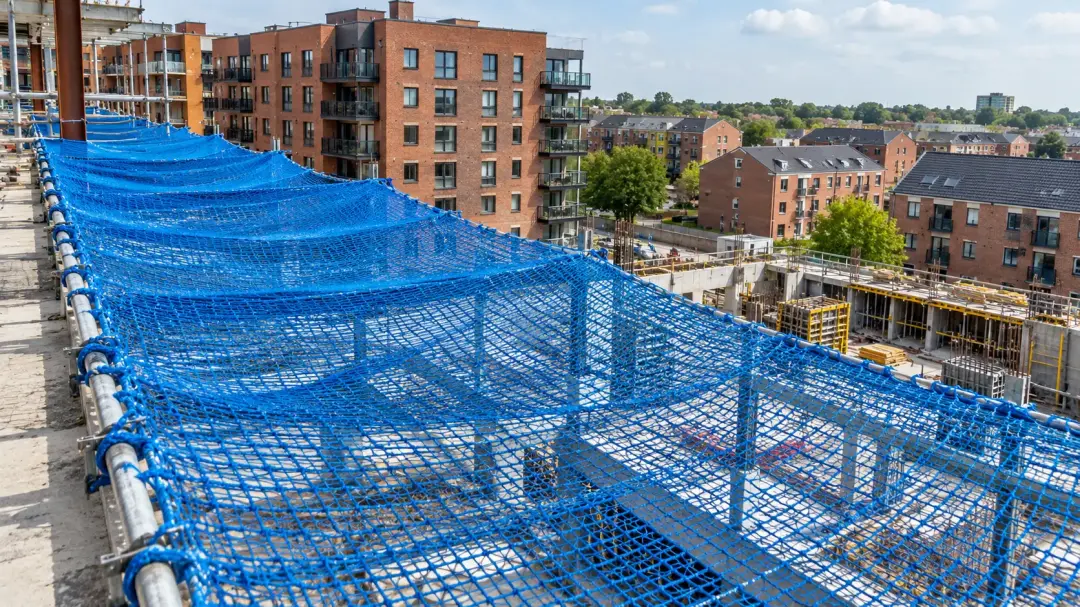
Safety nets help protect workers from the consequences of falls by creating a catching system below areas where work at height is taking place. If someone falls from an elevated position, the flexible net is intended to arrest that fall rather than allowing the person to continue towards the ground or a lower level.
The effectiveness of the system depends heavily on its position. A net located close beneath the work can limit the distance a person falls before making contact with it. The available clearance beneath the net must also be considered so the net can deflect safely without the person striking an obstruction below.
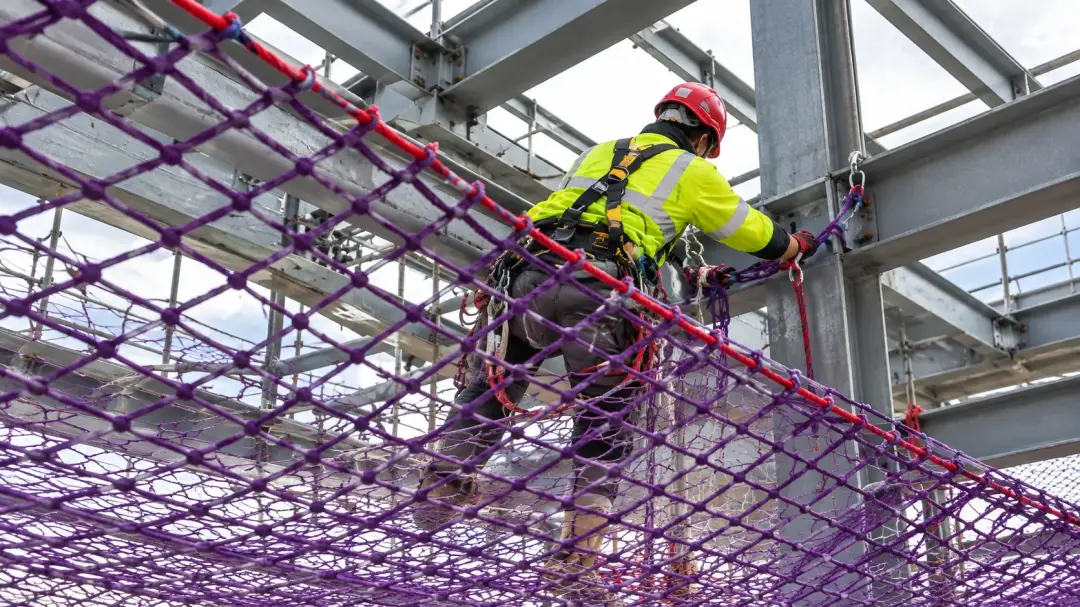
Safety nets can protect several people working across an area rather than requiring each person to attach individually to the same system. This collective protection is useful during roofing, steel erection and structural construction.
The netting still needs appropriate fixing points and should be installed by people who understand the system being used. Workers also need to know what areas are protected and whether any gaps remain.
Safety nets do not remove the need to prevent falls where reasonably possible. Instead, they provide an additional layer of protection designed to reduce the severity of an incident if someone does fall from the working level.
Reducing the Distance of a Fall
Safety nets are normally positioned as close as practical beneath the working area so the distance of any fall can be limited. The further someone falls before reaching the net, the greater the energy involved. Correct positioning therefore forms an important part of safety net planning. The net must also have enough clear space underneath to deflect when it catches a person.
Placing equipment, stored materials or structural obstructions immediately below the net can interfere with this movement. Changes to working levels may mean the net position needs to be reviewed as construction progresses. Installers should also consider gaps around columns, edges and other structural features.
The aim is to provide suitable coverage beneath the area where people may be exposed to falls. Correct net positioning cannot prevent the initial fall, but it can help reduce the distance travelled and limit the severity of the resulting impact.
Providing Protection Below Work Areas
Safety nets can provide a broad protected area beneath elevated construction work. This is particularly useful where workers move across roofs, steel frames or structural sections rather than remaining in one fixed position.
The netting can be arranged to cover the relevant work zone so protection moves beyond a single anchorage point or individual worker. During construction, workers may need to handle tools, materials and components while moving between different positions. A properly planned net system can remain beneath them throughout much of this activity. The exact layout depends on the structure.
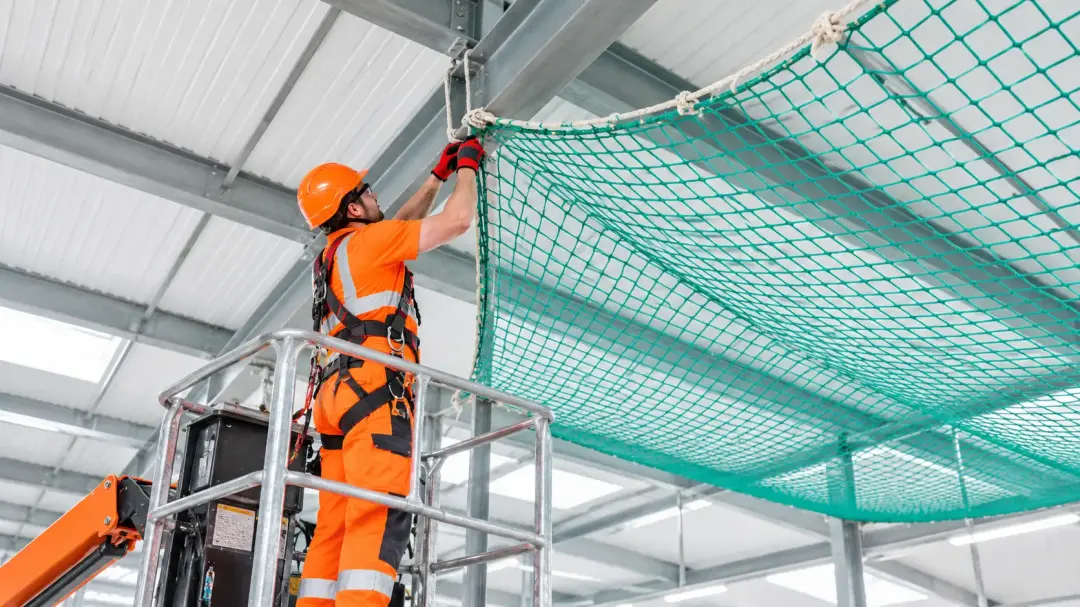
Columns, beams, walls and other features can influence where nets can be installed and how separate sections should be connected. Openings and changes in level also need careful attention. Protection beneath the work area should not create new problems below.
Clearance is needed for net deflection, and access routes or machinery may need to be coordinated around the system. Safety netting should therefore be planned alongside the wider site layout.
As work progresses, sections may need moving or reinstalling to follow construction activity. Professional installation helps ensure the covered area matches the tasks being carried out and that the netting remains securely attached throughout the period when workers are exposed to fall risks.
Protecting People Working at Height
People working at height can be exposed to serious risks if suitable precautions are not in place. Safety nets can provide collective fall protection beneath areas where workers are roofing, installing steelwork or carrying out structural tasks.
Because the protection covers an area, workers do not normally need to connect and disconnect from the net itself as they move around above it. This can make netting particularly useful where work covers a broad surface. The system still needs to be included within a properly planned approach to working at height.
Suitable edge protection, safe access and working platforms may also be required. Workers should understand which areas are protected and where gaps or changes in coverage exist. Nets also need to remain clear underneath so they can deflect when necessary. Regular checks throughout the project help confirm that the system remains suitable as the building and working conditions change.
Safety Nets for Roofing Work
Roofing work is a common application for construction safety nets because workers may be exposed to open internal areas before the roof structure is fully completed. Netting can be installed beneath the roof level to provide fall protection across the working zone. This can be particularly useful on industrial and commercial buildings with large roof areas. Roofers often need to move continuously while installing sheets, insulation and other materials. A safety net system can provide collective protection beneath much of this movement. The layout must account for roof shape, structural members and changes in working level.
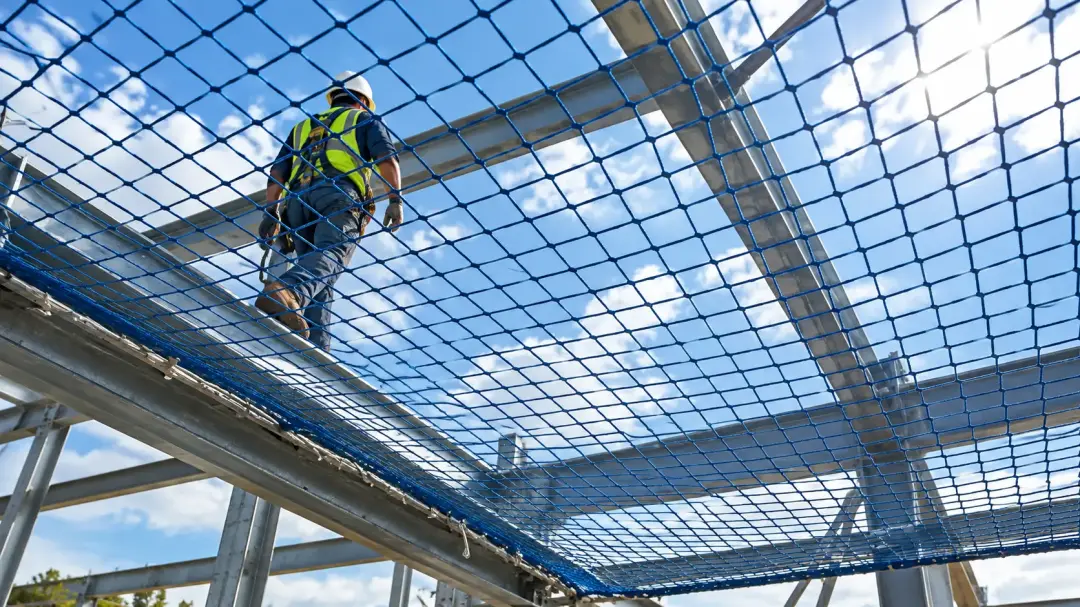
Openings around columns or other features should also be considered during installation. The net should be positioned close enough beneath the work to limit fall distance while leaving sufficient clearance below for safe deflection.
As roofing progresses, net sections may need to be moved or removed according to the construction programme. Weather conditions can affect roof work and should also be considered when assessing the safety arrangements.
Netting does not replace precautions intended to prevent falls from roof edges or fragile areas. Instead, it provides an additional protective system beneath the workers. Professional installation helps coordinate the safety nets with the roof structure, scaffolding and other site arrangements throughout the project.
Safety Nets for Scaffolding Projects
Safety nets can sometimes be used alongside scaffolding where work at height creates a need for additional fall protection beneath particular areas. The netting and scaffold need to be planned together so one system does not interfere with the other. Suitable attachment points must be identified before installation.
Scaffold lifts, ties, working platforms and access routes can all influence where netting can be positioned. Safety nets should not obstruct safe movement through the scaffold or create unexpected restrictions around ladders and stairs. The required clearance below the net also needs consideration.
Where scaffolding is altered, the effect on nearby netting should be reviewed. A fixing point should not be removed or changed without considering the safety net system attached to it. Good coordination between scaffold teams, safety net installers and site management helps prevent conflicts. When suitable for the project, safety netting can provide additional collective protection beneath elevated scaffold-related work areas.
Safety Nets for Steel Frame Construction
Steel frame construction often involves employees working on beams and structural members before floors and roofs are fully completed. Safety nets can provide collective fall protection below these elevated working areas. The steel frame can offer suitable locations for attaching the net system, although each installation needs careful planning. Net sections may be fitted beneath bays as the frame progresses. This allows protection to follow steel erection or subsequent roofing work. The position of beams, columns and connections affects the shape and coverage of each net. Installers need to minimise unprotected gaps around structural members.
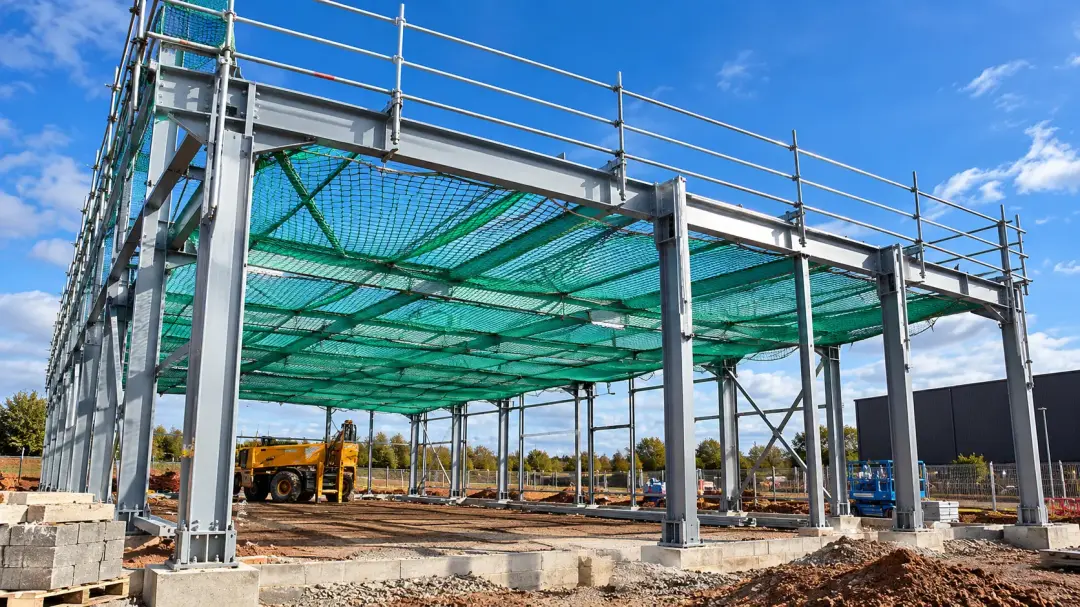
The available space beneath the net must also allow the mesh to deflect if a fall occurs. Construction equipment, plant and stored materials should therefore be considered when planning the installation. As additional steelwork is installed, attachment points and working levels may change.
The netting should be reviewed and moved where necessary rather than assuming the original layout remains suitable throughout the entire build.
Other forms of fall prevention may also be needed around edges or access routes. Safety nets are most effective when coordinated with the steel erection sequence and wider site safety arrangements. Professional installation can help ensure the netting is securely attached to the frame and provides practical coverage beneath active elevated work areas.
Safety Nets for New Build Projects
New build projects can involve repeated periods of working at height as structural frames, roofs and upper levels are created. Safety nets may be used to provide protection beneath these developing work areas. Their flexibility makes them suitable for many large construction projects where the building changes significantly during each phase.
Nets can be installed beneath roof structures, steelwork or other elevated sections according to the programme. As construction advances, they may need to be moved to new areas. Planning should therefore consider both the current work and the next stage of the project.
Scaffolding, lifting equipment and temporary access routes may all interact with the netting. Clear communication between contractors is important. Safety nets should remain properly secured and inspected while they are required. Once an area no longer needs protection, removal should also be controlled. Professionally managed safety netting can support changing work-at-height requirements throughout different phases of a new build project.
Safety Nets for Commercial Construction Sites
Commercial construction sites often contain large roof areas, structural frames and elevated work zones where safety nets can provide useful collective fall protection. Projects may include offices, retail buildings, leisure facilities and other commercial developments. The scale of these buildings can make broad-area protection especially important. Rather than protecting only one fixed position, netting can be installed beneath larger sections where teams move continuously during construction. The system should be coordinated with scaffolding, steelwork, roof installation and mechanical equipment.
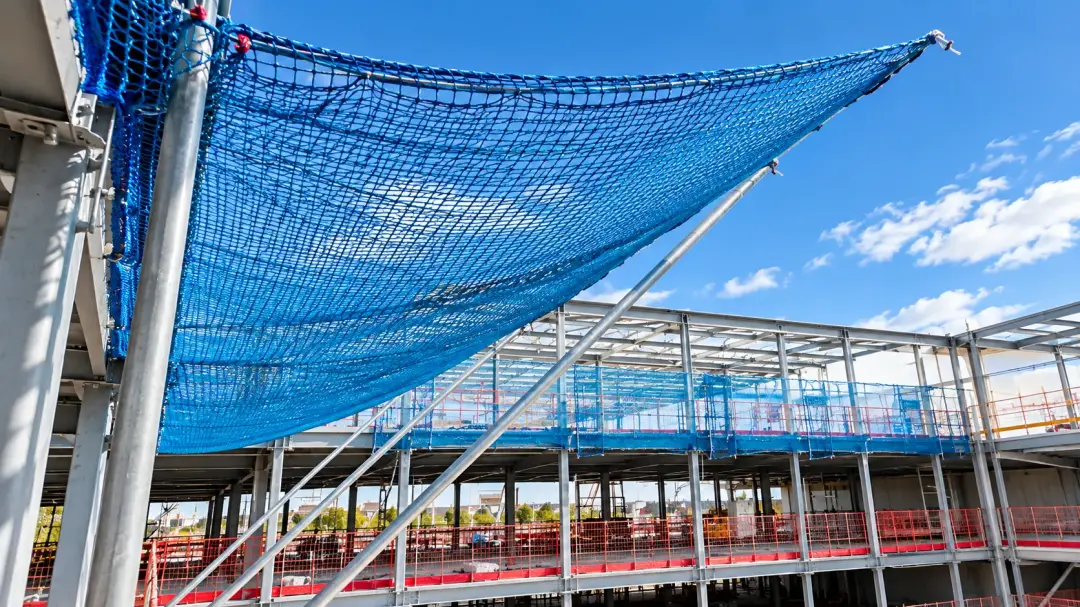
Different contractors may use the same general work area at different stages, so changes to the building programme can affect the required net layout. Access for cranes, lifting equipment and materials also needs consideration.
Nets should not be positioned where ongoing work could damage them unnecessarily. Site managers and installers should agree where protection is required and how long it will remain in place. Regular checks can identify damage or changes caused by construction activity.
If the structure is altered, fixing arrangements may need to be reviewed. Safety netting should form part of the broader working-at-height plan rather than being treated as an isolated system. Professional installation and coordination can provide commercial construction projects with flexible fall protection across large and changing work areas.
Safety Nets for Industrial Sites
Industrial construction and maintenance projects may require safety nets where employees work above production areas, structural frames or large open spaces. The site can present additional challenges because machinery, equipment and existing structures may restrict net positioning. Planning should identify suitable attachment points and adequate clearance below the net. Active industrial operations may also need to continue nearby.
In these cases, access and segregation require careful coordination. Safety netting can be useful during roofing, structural alterations and steelwork installation. However, every site has different risks. Plant, pipework and electrical equipment beneath the work area can affect whether nets are suitable.
Installation may also need to take place during shutdowns or quieter periods. Professional assessment helps determine where the netting can provide effective protection without interfering with essential site operations. Regular checks should continue throughout the work because industrial activities can change the conditions surrounding the installed system.
Safety Nets for Warehouse Projects
Warehouse construction frequently involves large steel frames and wide roof areas, making safety nets a common form of collective fall protection during certain stages of the build. Nets can be installed beneath roof and structural work where employees are exposed to falls. Large building bays can allow substantial areas to be protected at once. This is useful for teams installing roof sheets, structural components and related materials.
The system should follow the construction sequence. As one section is completed, netting may be moved to another active work area. Warehouse projects often involve cranes, access platforms and other large equipment, so the net layout should be coordinated with these operations.
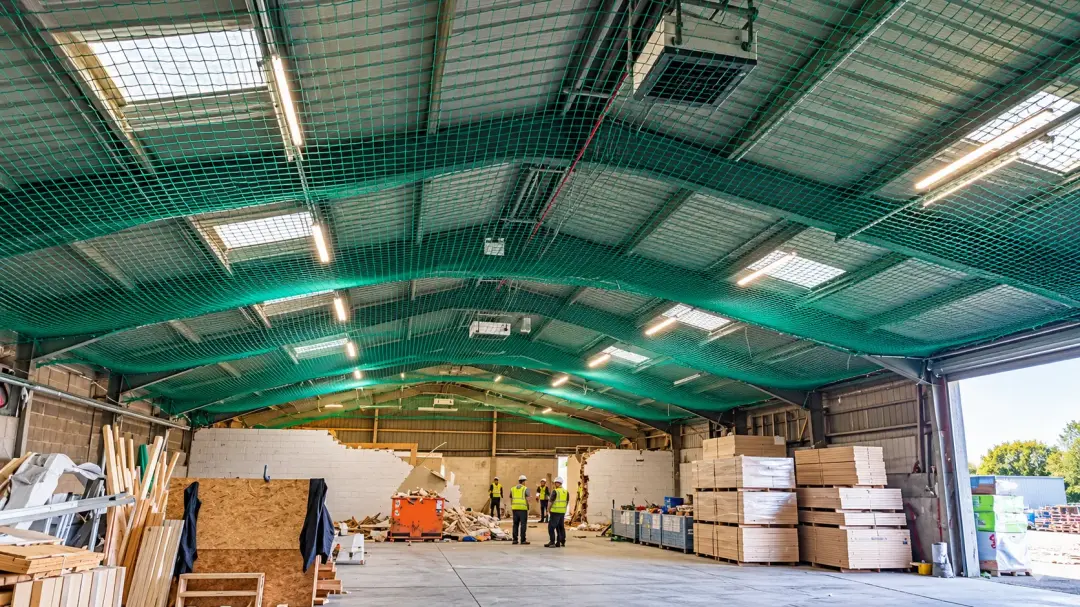
Clearance beneath the net remains essential. Stored materials or machinery should not interfere with the space needed for deflection. Attachment points need to suit the steel frame and remain secure throughout use.
Changes to the structure should be communicated to the net installer. Warehouse projects can also progress quickly, making regular inspection particularly important. Damaged or displaced sections need attention before work continues above them.
Safety nets do not replace other protective measures required around roof edges or access areas. When included within the wider work-at-height arrangements, professionally installed netting can provide practical protection beneath large warehouse construction zones.
Protecting Workers During Structural Work
Structural work can expose workers to open edges, incomplete floors and gaps within developing buildings. Safety nets can provide protection beneath selected areas during these stages. They are particularly useful where employees need to move across steel or roof structures. The system can cover a wider zone than many individual fall-arrest arrangements.
Netting needs to be positioned according to the sequence of structural work. Beams, columns and temporary supports can affect both attachment points and coverage.
The net should remain close enough to reduce fall distance while still having sufficient clearance beneath it. Workers also need safe routes to reach their positions. Safety nets do not replace suitable access equipment or edge protection where those measures are required. As structural work progresses, the netting may need relocating. Regular coordination between the structural contractor and net installer helps ensure protection remains aligned with the active work area.
Protecting Areas Beneath Elevated Work
Safety nets are primarily designed to protect people who may fall from height, but the area beneath elevated work still requires careful management. Construction activity above can create risks involving tools, materials and moving equipment. The safety net system should therefore be coordinated with exclusion zones and other site controls. People should not assume that a fall-arrest net automatically provides complete protection from every object that could fall from above. Different debris or containment systems may be needed depending on the work. Access beneath the net should also be limited where necessary because the net requires space to deflect if someone falls into it.
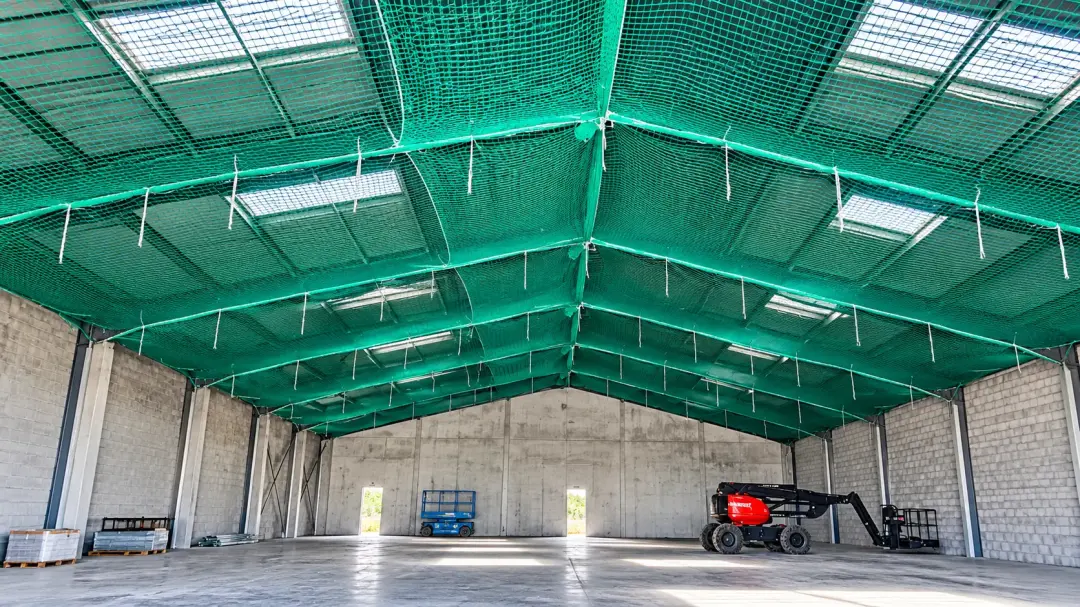
Plant, stored materials and temporary structures should not occupy this clearance zone. The site layout may change as construction progresses. Areas that were previously empty could later become routes for workers or machinery.
Site management should therefore review the space beneath the net regularly. Warning signs or barriers can help control access where appropriate. Planning also needs to consider retrieval if a person falls into the net.
The system should not be positioned in a way that makes rescue unnecessarily difficult. Professional safety net planning considers both the people working above and the activities taking place below, helping the complete work zone remain organised around the installed protection.
Reducing the Risk of Serious Injury
Safety nets can reduce the risk of serious injury by limiting the distance a worker falls and absorbing some of the energy involved. The flexible mesh deforms when loaded rather than creating the immediate impact associated with a hard surface.
Correct positioning is essential. A net installed too far beneath the working level allows a longer fall before the worker reaches it. There must also be enough clear space underneath for the net to deflect safely. The person should not strike plant, materials or parts of the structure through the net.
The system needs secure attachment points and appropriate installation. Damage can also affect performance. Regular inspection helps identify cuts, broken mesh or altered fixings before they become a serious concern. Safety nets cannot guarantee that a fall will result in no injury. Their purpose is to reduce the consequences where a fall cannot be completely prevented through other measures.
Supporting Safer Access Around the Site
Safety netting can support safer site access when it is planned together with scaffolding, walkways, stairs, lifting areas and vehicle routes. Poorly coordinated netting can create obstacles, so the wider construction layout needs consideration before installation begins. Access routes should remain clear for workers moving to and from elevated areas.
Net attachment points should not interfere unnecessarily with scaffold access or structural connections. The area below the net also needs management so vehicles and stored materials do not occupy required deflection space. Construction sites change frequently. A route that is clear during installation may later become an active delivery or work zone.
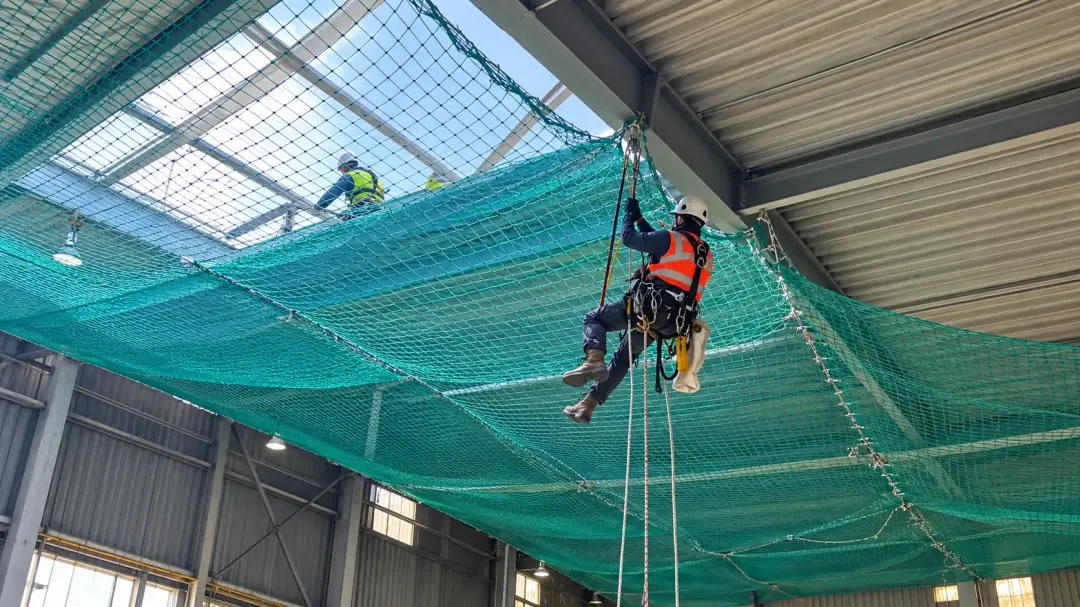
Regular coordination meetings can help identify these changes. The safety net layout may then be adjusted if necessary.
Emergency arrangements should also consider how someone could be reached after falling into the net. Safe access for rescue should be possible without creating additional risks. Nets may need to be installed in sections so they provide protection without blocking essential movement elsewhere on the site.
Clear communication between trades is important because scaffolding, steelwork and roofing teams may all interact with the system. When safety netting is treated as part of the overall site plan, it can provide effective fall protection while allowing workers, materials and equipment to move around the project efficiently.
Using Safety Nets in Difficult Access Areas
Safety nets can be useful in difficult access areas where installing conventional platforms or other protection beneath elevated work would be impractical. The flexible system can sometimes be arranged around structural features and irregular spaces. However, difficult access also creates additional installation challenges.
Suitable fixing points must still be available. Installers need safe access to these points without exposing themselves to unnecessary risk. The shape of the area may require several connected net sections. Columns, beams and equipment can create gaps that need careful planning. Clearance below the net remains necessary regardless of how restricted the space is.
The ability to rescue someone after a fall should also be considered. A net should not be installed simply because the location is awkward. The complete working-at-height plan needs to determine whether it is the appropriate protection method. Professional installers can assess difficult areas and identify whether safety netting can be fitted effectively.
Planning Safety Netting Around Scaffolding
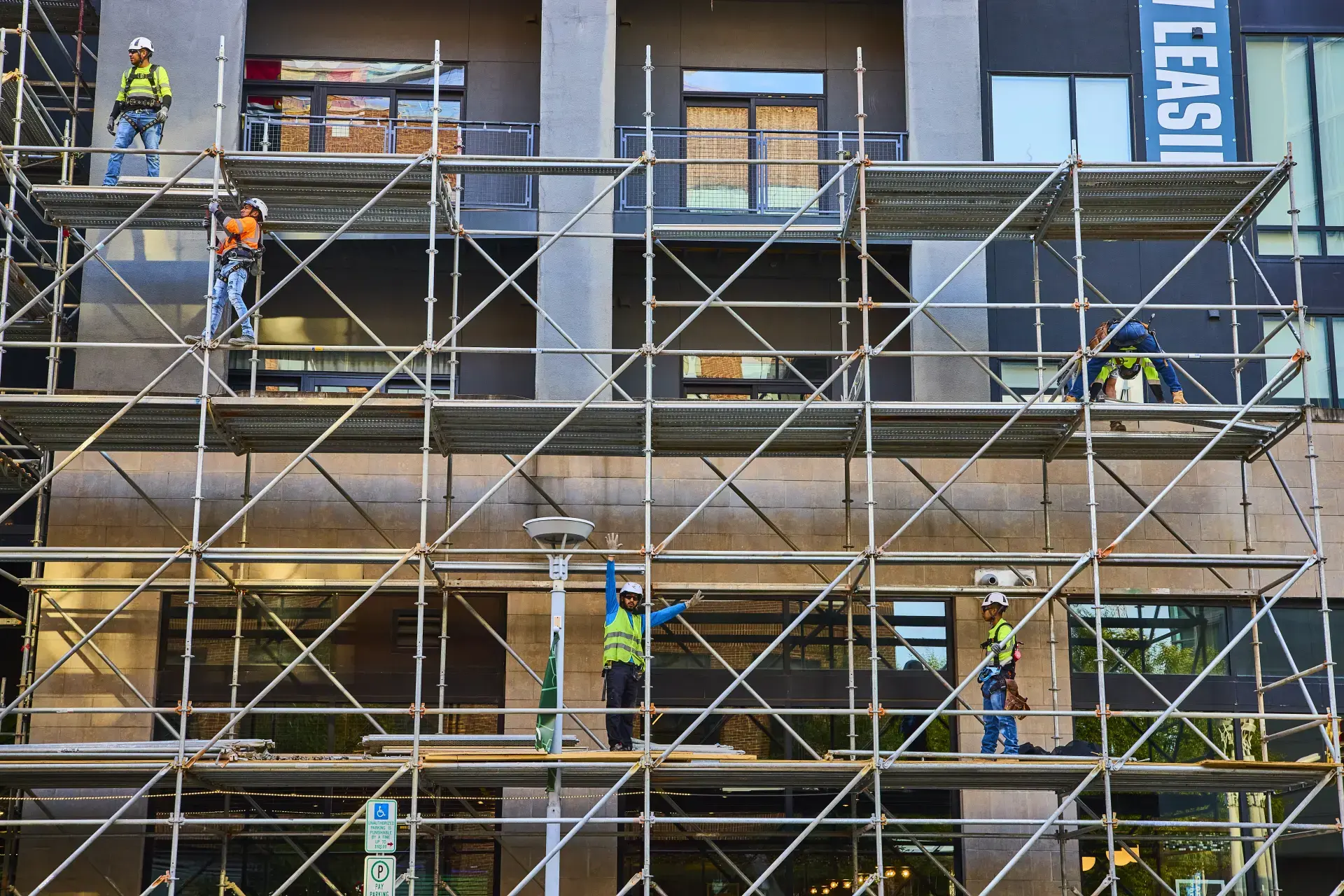
Planning safety netting around scaffolding requires coordination between the scaffold design, work area and net installation. Both systems may occupy similar parts of the structure, so fixing points and access routes need to be agreed carefully. Scaffold standards, ledgers, platforms and ties can influence where safety nets can be attached or passed around the structure.
The netting should not obstruct ladders, stair towers or normal platform access. Workers still need clear routes to reach their working positions. The system also needs adequate clearance beneath it. Scaffold components, stored materials or equipment should not sit where they could interfere with net deflection.
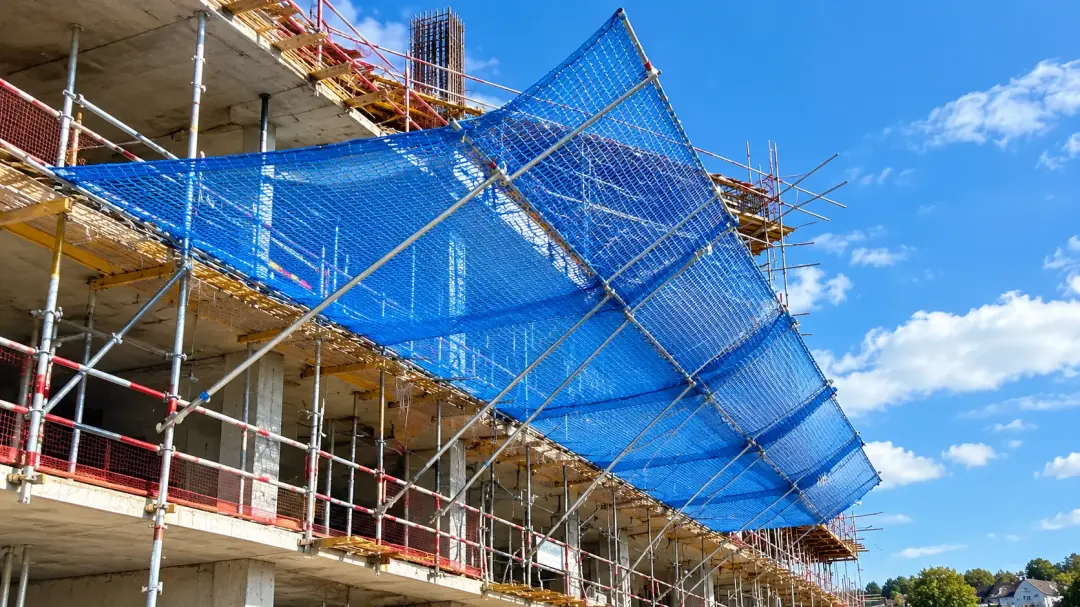
If the scaffold is altered during construction, the net installation may be affected. Removing a tie or changing a lift could alter nearby support arrangements. Communication between scaffold contractors and safety net installers is therefore important.
The netting should not be modified informally by other trades. Any necessary changes should be reviewed by people responsible for the system. Planning should also consider the order in which scaffolding and nets will eventually be dismantled.
Protection may still be required while other temporary systems are being removed. Coordinating both systems from the start helps maintain practical access while preserving the fall-protection coverage required beneath elevated work.
SN Scaffolding Ltd supplies, installs and maintains EN 1263-1 compliant safety nets for construction, roofing and specialist projects. Our scaffolding company offers fall-arrest installation, edge protection, debris netting, flexible hire, testing, inspections and fast collection. With industry experience and professionalism, we serve clients across Norfolk and Suffolk. Contact our team today.